
Santa’s reindeer: their names, their story and real reindeer
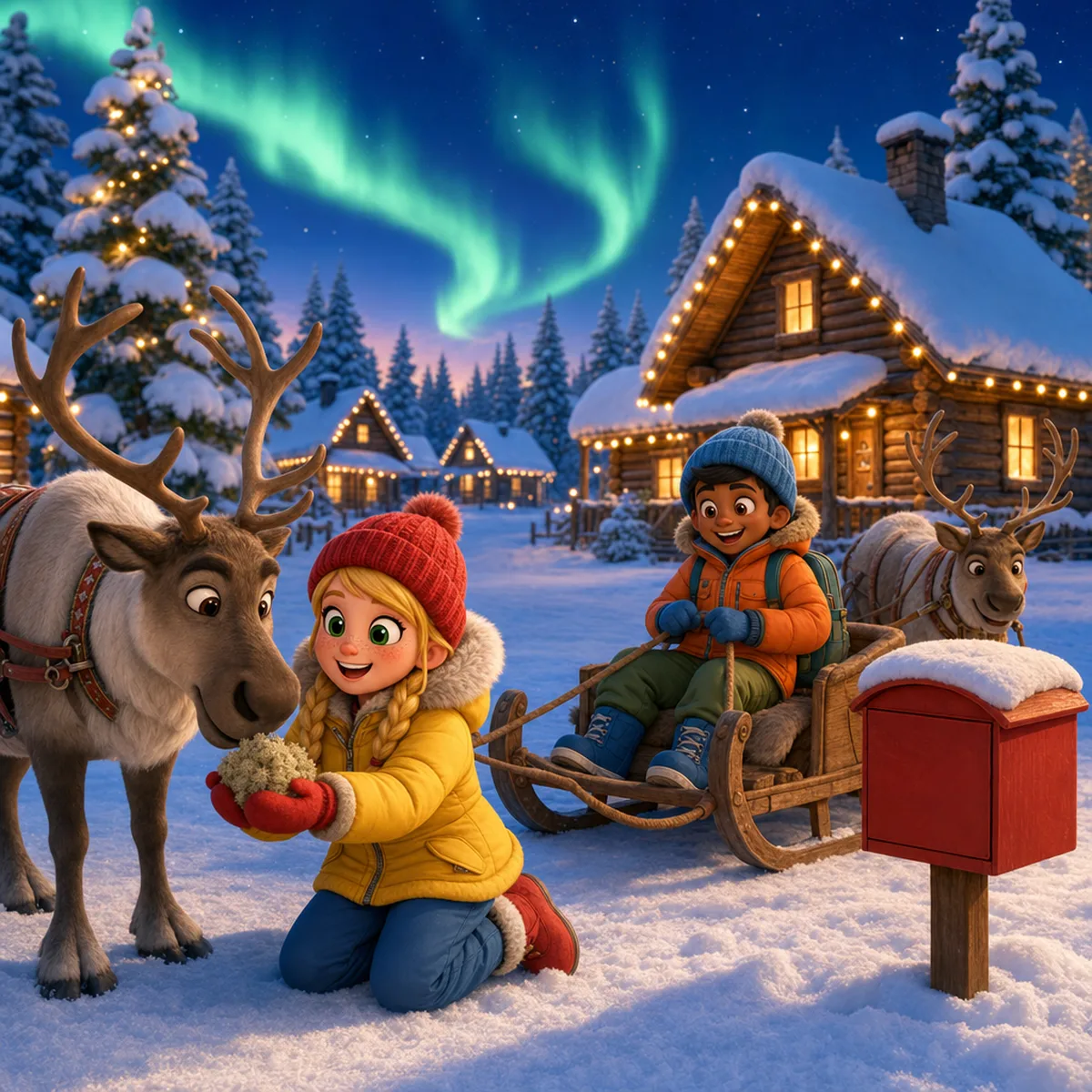
Dasher, Dancer, Prancer, Vixen, Comet, Cupid, Donner, Blitzen… and Rudolph, the red-nosed reindeer. Santa’s reindeer have names, a story of their own, and real cousins living in the snows of Lapland. Here is where their names come from, why they pull the sleigh, and what is so amazing about real reindeer: everything you need to answer your children’s questions.
Where do Santa’s reindeer come from?
The reindeer first appear in a poem published without its author’s name on 23 December 1823, in a New York State newspaper, the Troy Sentinel. The poem, "A Visit from St. Nicholas", tells the story of Christmas Eve: a little sleigh pulled by eight reindeer lands on the roof, and Father Christmas comes down the chimney. It was later attributed to Clement Clarke Moore, although some historians believe another poet, Henry Livingston, wrote it. The poem became so famous that in the United States it is still read to children on Christmas Eve.
It was this poem that gave Father Christmas his flying sleigh, his reindeer and their names. Before it, St Nicholas, Father Christmas’s ancestor, usually travelled on foot, on horseback or on a donkey.
Santa’s reindeer names
In the poem, Father Christmas calls each of his eight reindeer by name to spur them on:
- Dasher, the one who dashes ahead;
- Dancer;
- Prancer, who rears up as he goes;
- Vixen;
- Comet;
- Cupid;
- Donner;
- Blitzen.
A fun detail for older children: in the 1823 version, the last two were called Dunder and Blixem, Dutch words meaning "thunder" and "lightning". They became Donner and Blitzen later on, names closer to German.
Rudolph, the red-nosed reindeer
Rudolph, the ninth reindeer, is not in the 1823 poem. His story was first told in 1939, in the United States, in a little book: everyone laughed at his shiny red nose, until one foggy night when that nose became precious. It lit up the way, and Rudolph took his place at the front of the sleigh. The book, written by Robert L. May, was given to children who came to see Father Christmas in department stores.
Ten years later, a song made him famous all over the world. Children love his story because it shows that a difference others make fun of can become a strength.
How does Father Christmas’s sleigh fly?
The reindeer of Lapland keep their hooves firmly in the snow: flying is the secret of Santa’s reindeer. The story goes that they take off on the evening of 24 December to travel around the whole world in a single night. When children ask, you can answer just as the stories do: it is one of Father Christmas’s great secrets. And why not follow the sleigh’s journey online on Christmas Eve, as millions of children do every year?
Real reindeer: what children don’t know
They live in the far North
Reindeer live in the cold regions of the far north of our planet. In Finnish Lapland, where Father Christmas is said to live, herders look after around 200,000 reindeer, a few more or a few fewer depending on the year. In Rovaniemi, Santa Claus Village even sits right on the Arctic Circle.
Hooves that go "click"
Their wide hooves spread out like snowshoes so they don’t sink into the snow, and they use them as shovels to dig down to the lichen they eat in winter. When they walk, you can hear a funny little "click" at every step. Their furry muzzles warm up the icy air before it reaches their lungs.
Santa’s reindeer are probably girls
This is children’s favourite fact. Among reindeer, both males and females grow antlers, which is unusual in the deer family. But the males lose theirs at the start of winter, while the females keep them until spring. And in every picture, Santa’s reindeer have splendid antlers in December… So they are most likely females!
Leaving a carrot for the reindeer
In many countries, children think of the reindeer on Christmas Eve. In the UK, many leave out a mince pie for Father Christmas and a carrot for the reindeer; in the United States, children leave biscuits and a glass of milk for Santa, and a carrot for the reindeer. In New Zealand too, some children leave a little snack and a carrot. A lovely ritual to share at home, while learning the names of the eight reindeer together.
Reindeer, Lapland and the story of Father Christmas all feature in the book The Kidtrotters: Christmas around the world, an Advent calendar in a book with one country and one game for every day from 1 to 24 December. To carry on the journey, read about Christmas traditions around the world.
Frequently asked questions
What are the names of Santa’s reindeer?
Dasher, Dancer, Prancer, Vixen, Comet, Cupid, Donner and Blitzen, the eight names from the 1823 poem. Rudolph, the ninth, appears in a book from 1939.
When did Rudolph first appear?
In 1939, in a little American book by Robert L. May, given to children who came to see Father Christmas in department stores. A song made him famous ten years later.
How many reindeer pull Father Christmas’s sleigh?
Eight in the 1823 poem, and nine with Rudolph, who leads the sleigh on foggy nights thanks to his shiny nose.
Are Santa’s reindeer female?
Probably! Male reindeer lose their antlers at the start of winter, while females keep theirs until spring. Reindeer with splendid antlers in December are therefore most likely females.