
La Befana, the kind Italian witch of 6 January
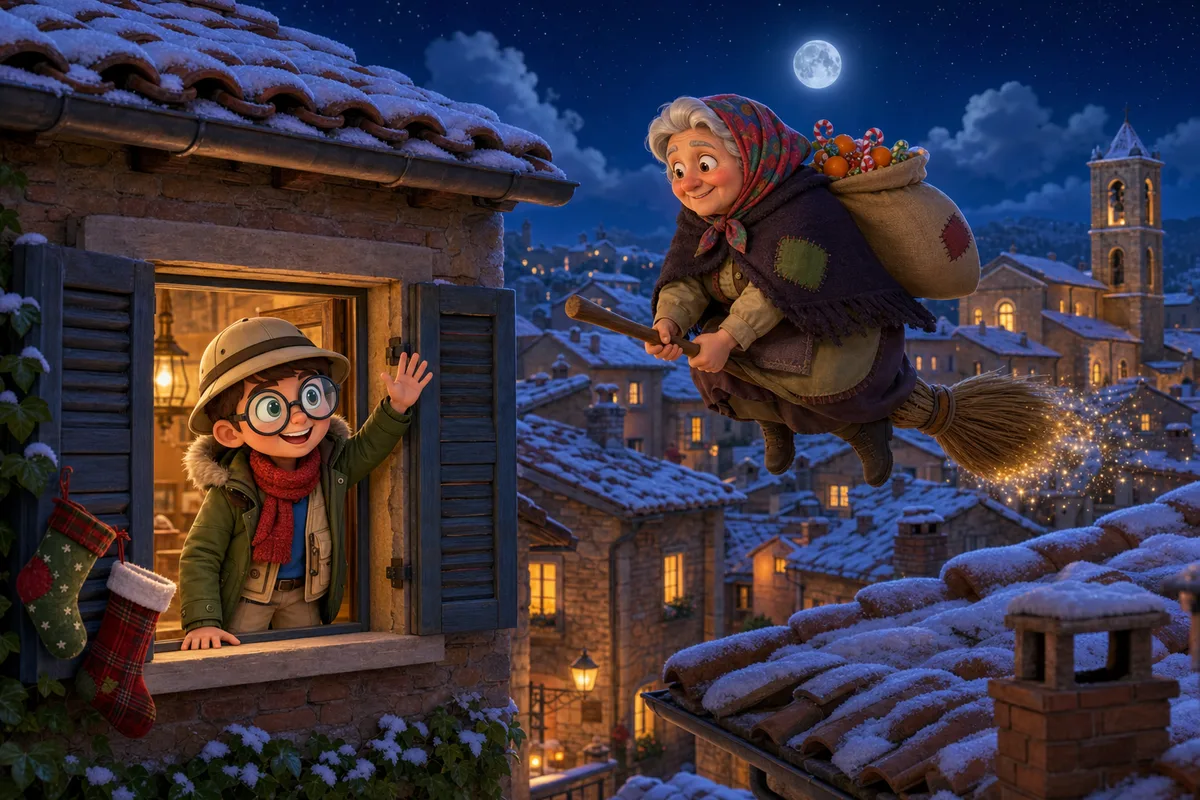
In Italy, Christmas does not stop on 25 December. On the night of 5 to 6 January, an old lady still flies from house to house on her broomstick: La Befana, the kind witch who fills children’s stockings. Here is her legend, her traditions, and how to tell her story to children.
Who is La Befana?
In Italy, people say that La Befana is a very kind old lady, with a headscarf, a shawl and worn-out shoes. On the night of 5 to 6 January, she flies from house to house on her broomstick and comes down the chimneys. She fills the stockings that children have hung up with sweets and fruit.
For those who have been a little naughty, she sometimes leaves a lump of “coal”… made of sugar, as a joke. And before she leaves, it is said that she even gives the house a quick sweep with her broom.
The legend of La Befana and the Three Kings
A legend tells that the Three Kings, on their way to Bethlehem to see the baby Jesus, knocked at La Befana’s door one evening to ask the way. They invited her to come with them. She said no, because she had too much housework to do. Then she changed her mind, took her broom and set off after them… but never found them. Since then she has been looking everywhere for the baby Jesus, and she leaves a present in every house where a child lives.
Her name is thought to come from the word “Epiphany”, the feast on 6 January that celebrates the arrival of the Three Kings to see Jesus.
When does La Befana come?
La Befana comes on the night of 5 to 6 January, the day of Epiphany, which is a public holiday in Italy. For many Italian children, it is the last celebration of the Christmas holidays. As an Italian saying puts it: Epiphany sweeps all the holidays away with it.
So in Italy, children wait for several visitors: Babbo Natale, Father Christmas, on the evening of 24 December; Saint Lucy on 13 December in some northern towns, such as Verona; and La Befana on 6 January.
Befana festivals in Italy
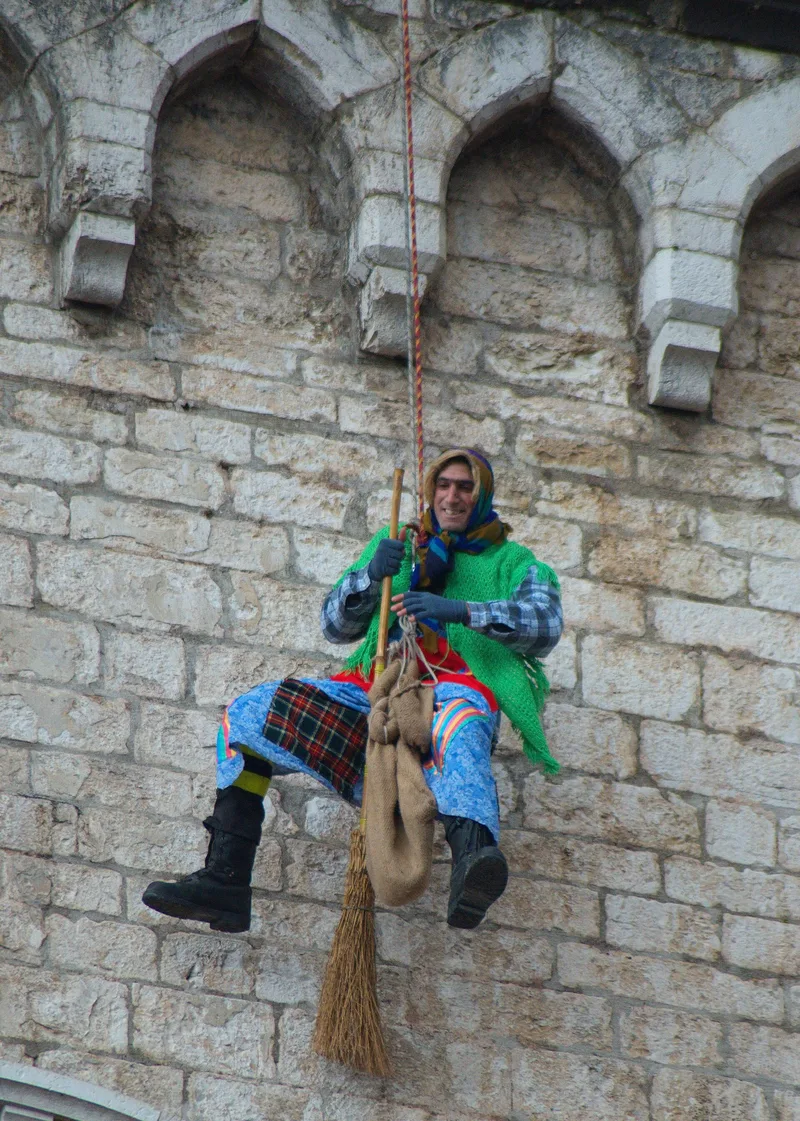
All over Italy, Befanas parade through the streets in early January. In Gubbio, in Umbria, a firefighter dressed as La Befana even abseils down the front of the palace, to cheers from the children. At the markets, you can buy giant stockings full of sweets, and black sugar coal.
In Rome, Piazza Navona hosts a big Christmas market every winter, which ends with the festa della Befana, the Befana festival, on 6 January. In Venice, rowers dressed as La Befana even race along the Grand Canal: it is the regata delle Befane.
And in Spain, the Three Kings
In Spain, it is the Three Kings themselves who bring the presents, on the morning of 6 January. The evening before, they parade through the streets on floats during the cabalgata and throw sweets to the crowd. Before going to bed, children leave a glass of water for their camels. The next day, the whole family shares the roscón, the Kings’ cake, which hides a little figurine and a bean. In France, it is the galette des rois that keeps the celebrations going.
Telling children about La Befana
- hang up a stocking on the evening of 5 January, as they do in Italy;
- tell the legend and ask the children what they would have done in La Befana’s place;
- compare it with the Spanish roscón or the French galette des rois: who will find the bean?
La Befana and the Three Kings have their own double page in the bonus pages of the book The Kidtrotters: Christmas around the world, which carry on after 24 December all the way to Epiphany. The book also includes an audio story about La Befana. Read also: Christmas traditions around the world.
Frequently asked questions
Who is La Befana?
A kind old lady from Italian tradition who flies on her broomstick and fills children’s stockings with sweets on the night of 5 to 6 January.
What is the legend of La Befana?
She is said to have refused to follow the Three Kings to the baby Jesus, then changed her mind; since then she has been looking for him everywhere and leaves a present in every house.
Why does La Befana leave coal?
For children who have been naughty, she leaves a lump of “coal”… made of sugar, as a joke.